
Salome’s Bad Rap
By Olivia Carlé
For hundreds of years, paintings, books, plays, an opera, poems, ballet and movies have portrayed the Bible account about Salome through their own interpretation. We all read through our own lens and must check ourselves to see if what we believe is actually true. What is the true story of Salome, King Herod’s step-daughter? We don’t know much about her, but even what we do know some have ignored or have been ignorant about. She is shown to us by artists of all kinds as a young woman, full of beauty, a heart of steel, and sex appeal. That she danced before King Herod and so wooed and weakened him that he became putty in her hands.
Salome Shown in Art

A poem excerpt by Carol Ann Duffy of Salome's thoughts:
“I had done this before, and surely would again, one way or another: I'd woken up with a strange man in bed beside me. I didn't know who he was, and who cares, anyhow? He was obviously handsome…”
Oscar Wilde’s 1893 play: “Salomé” has Salome dancing “The Dance of the Seven Veils” - alluding to her doing a strip-tease.
What About the Movies?

Yes, these "Salome" portrayals are beautiful women, all very grown up and ready for action! Was Salome really like these women portrayed?
The Salome Account in the Scriptures
Let's find out who she was from the Scriptures - where all these writers I would think supposedly had started, but too locked into their adopted mind-set to see the words! Read the whole Salome account for yourself as a refresh.
Mark 6:14-32
...For Herod himself had sent and had John arrested and bound in prison on account of Herodias, the wife of his brother Philip, because he had married her. For John had been saying to Herod, “It is not lawful for you to have your brother’s wife.” Herodias had a grudge against him and wanted to put him to death and could not do so; for Herod was afraid of John, knowing that he was a righteous and holy man, and he kept him safe. And when he heard him, he was very perplexed; but he used to enjoy listening to him. A strategic day came when Herod on his birthday gave a banquet for his lords and military commanders and the leading men of Galilee; and when the daughter of Herodias herself came in and danced, she pleased Herod and his dinner guests; and the king said to the girl, “Ask me for whatever you want and I will give it to you.” And he swore to her, “Whatever you ask of me, I will give it to you; up to half of my kingdom.” And she went out and said to her mother, “What shall I ask for?” And she said, “The head of John the Baptist.” Immediately she came in a hurry to the king and asked, saying, “I want you to give me at once the head of John the Baptist on a platter.” And although the king was very sorry, yet because of his oaths and because of his dinner guests, he was unwilling to refuse her. Immediately the king sent an executioner and commanded him to bring back his head. And he went and had him beheaded in the prison, and brought his head on a platter, and gave it to the girl; and the girl gave it to her mother. When his disciples heard about this, they came and took away his body and laid it in a tomb.
First thing to note is that the Scripture doesn't give us the name of Herod's step-daughter, Herodias's daughter, but a little is known by reading Josephus (37 - 100 AD) who was a Jewish historian for the Romans. He says in his "Antiquities of the Jews" (18.136)
Herodias [...] was married to Herod, the son of Herod the Great, who was born of Mariamne, the daughter of Simon the high priest, who had a daughter, Salome; after whose birth Herodias took upon her to confound the laws of our country, and divorced herself from her husband while he was alive; and was married to Herod, her husband's brother by her father's side, he was tetrarch of Galilee; but her daughter Salome was married to Philip, the son of Herod, and tetrarch of Trachonitis; and as he died childless, Aristobulus, the son of Herod, the brother of Agrippa, married her; they had three sons, Herod, Agrippa and Aristobulus.
So, Salome it is.
Secondly, what sort of dance was it? The Biblical text doesn't say, it only states that she "pleased" Herod and his guests with her dancing (v. 22). Was it an erotic dance to seduce Herod and the rest of his lords, military commanders and the leading men? In order to answer that we have to establish her age. Mark 6:22 states she is a daughter (thygatrion Strong's G2364, female descendant), and three times in vv. 22 and 28 that she is called a korásion (Strong's G2877) that is the diminutive of girl (e.g.: duck and duckling) so it denotes "a little girl (an informal colloquial word)." Therefore we learn that Salome is called "a little girl", not a woman.
Jairus' Daughter
We see this use again in Mark 5 in the story of Jairus' daughter:
...One of the synagogue leaders, named Jairus, came, and when he saw Jesus, he fell at his feet. He pleaded earnestly with him, “My little daughter is dying. Please come and put your hands on her so that she will be healed and live.” So Jesus went with him. A large crowd followed and pressed around him... While Jesus was still speaking, some people came from the house of Jairus, the synagogue leader. “Your daughter is dead,” they said. “Why bother the teacher anymore?” Overhearing what they said, Jesus told him, “Don’t be afraid; just believe.” He did not let anyone follow him except Peter, James and John the brother of James. When they came to the home of the synagogue leader, Jesus saw a commotion, with people crying and wailing loudly. He went in and said to them, “Why all this commotion and wailing? The child is not dead but asleep.” But they laughed at him. After he put them all out, he took the child’s father and mother and the disciples who were with him, and went in where the child was. He took her by the hand and said to her, “Talitha koum!” which means “Little girl, I say to you, get up!”. Immediately the girl stood up and began to walk around she was twelve years old. At this they were completely astonished. He gave strict orders not to let anyone know about this, and told them to give her something to eat. Mark 5:21-24, 35-42.
Let's look at the words used:
(I) Jairus says: "My little daughter" vs. 23.
In Greek daughter is: "thugater" (Strong's G2365) but if you want to say "little daughter" you would use: "thugatrion" which is the diminutive form, i.e. the small version e.g.: duck/duckling.
(ii) Jesus refers to her in vv. 39, 40, 41 as "paidion" - the diminutive of "pais"- a young child.
"Paidion" Strong's G3813 definition:
A young child, a little boy, a little girl, infants, children, little ones, an infant, of a (male) child just recently born, of a more advanced child; of a mature child; metaph. children (like children) in intellect.
(iii) When Jesus arrives at the house and raises the girl from the dead in vs. 41, He calls her a "little girl" korásion - the diminutive form (Strong's G2877). She was a twelve year old girl (v. 42). Just twelve.
One thing to consider here, we mustn't look at the Scriptures through 21st century eyes. A girl of twelve even fifty years ago was not the twelve year-old of today. The word "teenager" wasn't invented till around the 1940's. Twelve year-olds these days can be very worldly wise, who are born like little kittens, but with their eyes forced open before their time.
(iv) It is thought that Mark's gospel account came from Peter. If so, both Peter and Mark were Jewish and would have spoken Aramaic and Hebrew most assuredly (these are similar Semitic languages), and they also spoke Greek, the trade language. If you are uncertain about this, Gateway Centre for Israel explains it well. When Jesus was on the cross, Pilate wrote his statement in Hebrew, Latin and Greek for everyone passing by to read.
With that background, Mark adds some additional information. He says that Jesus:
...took her by the hand and said to her, 'Talitha koum!' (which means, 'Little girl, I say to you arise') Mark 5:41.
Mark uses the Greek word korásion, as above to explain it to us, but what Jesus actually spoke at that moment was Aramaic saying: "Talitha" (Strong's G5008) meaning: "a girl, a maiden", but root word of talitha, is taleh which means: a lamb (Strong's H2924). Cf 1 Sam 7:9, Isa 65:25. We also have this expression in English if we call our child: "My little lamb". Jesus loved little children and so perhaps it speaks of his tender heart as He took her by the hand and said by implication... My little lamb, I say to you, arise!...
(v) In Luke's account (Luke 8:49-56) of the same event, Jesus says: “Child, arise!” v. 53 ("pais": child, servant, boy or girl. Strong's G3816).
(vi) Matthew's account (Matt 9:18-19, 23-26) gives us the account of the girl's resurrection stating: "He entered and took her by the hand, and the little girl (korásion) arose".
(vii) When Jesus stayed back in Jerusalem after the Passover feast, Luke 2:42-43 tells us:
His parents went to Jerusalem every year at the Feast of the Passover. And when He was twelve years old, they went up there according to the custom of the feast; and as they were returning, after spending the full number of days required, the boy Jesus stayed behind in Jerusalem...
Some translation say "the boy Jesus" (NASB) However the Greek word used is "the child Jesus" - "pais" child, servant, boy or girl (Strong's G3816) - was twelve, the same age as the "korásion" - little girl of Mark 5.
Physical Possibility
One more thought here about Salome and her carrying a platter with John's head to her mother (v. 28). A male human head weighs approx 2.3-5 kg (5-11 lb); a Roman silver platter was between 0.5 and 1.5 kg (1-3 lbs). So would she have to be old enough, i.e. strong enough to carry it? An 8-12 year-old girl could indeed.
Conclusion
From the words we have looked at the same thought comes through. A child, a little child, a daughter, a little lamb, a girl. This Salome was not a young seductress, but a little girl at least younger than twelve who performed a very cute dance. Herod, being quite drunk, but thinking she was very sweet offered her "...up to half my kingdom!" Perhaps he thought that she would ask for something like - like a pony?! She being a little girl ran to her mother to find out what she should ask for. Herodias had a grudge against John for condemning her marriage to Herod and wanted to put him to death, so she snapped up this moment and and told Salome to ask for John's head on a platter. I suggest that this image is in keeping with the text - a far more accurate portrayal.

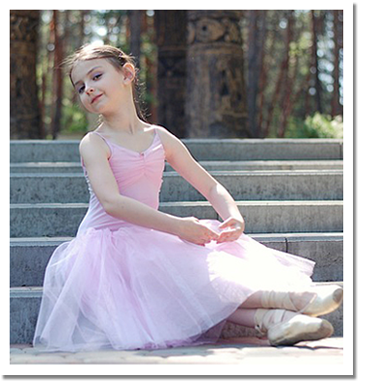
The daughter of Herodias herself came in and danced, she pleased Herod... and the king said to the girl, "Ask me for whatever you want and I will give it to you... up to half my kingdom".
And she went out and said to her mother,
"What shall I ask for?"